Light a home bar for evening drinks
Light a home bar for evening drinks. A clear working guide to brightness level, source placement, and colour temperature.
- Published: 13 September 2026
- 672 words
- 4 min read
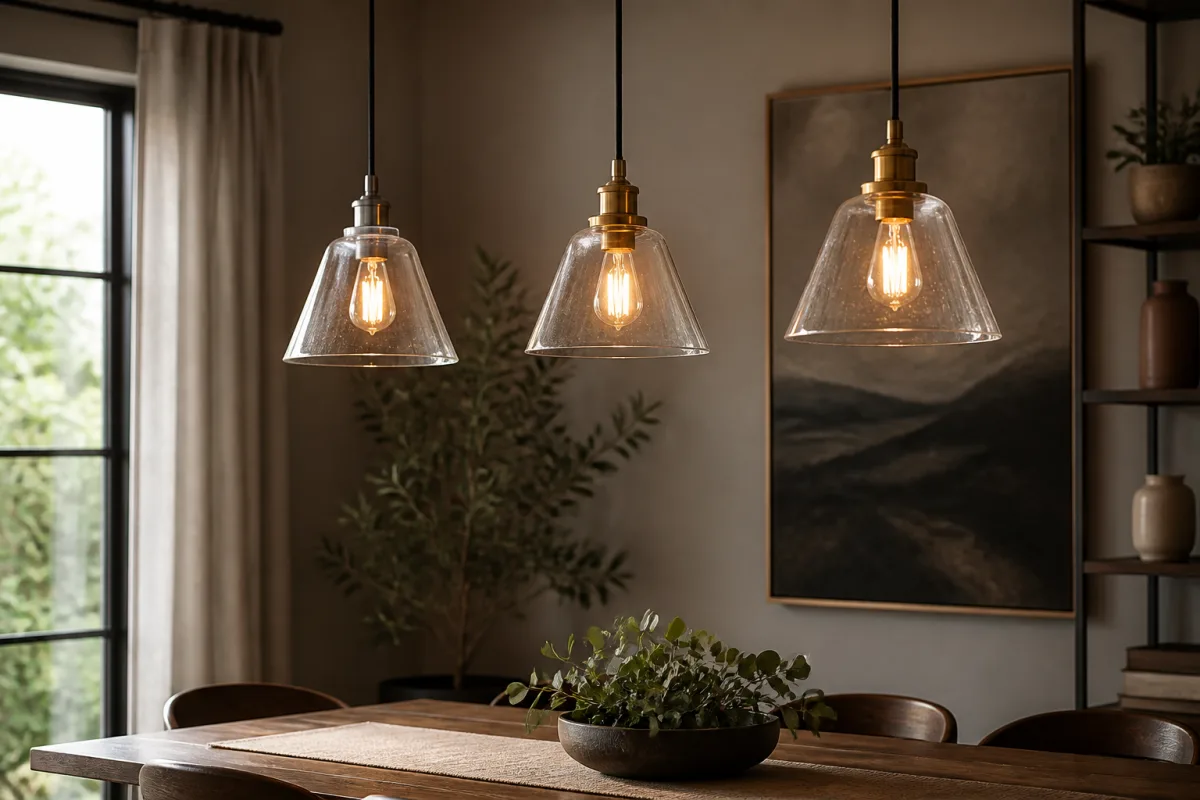
A home bar is mostly a lighting decision. The bottles, the counter and the first pour all read better under one warm, low pool of light than under the room's ceiling grid — the difference between a corner that serves drinks and a corner that happens to store them. The ritual that light is serving, the aperitivo hour with its small plates and its slower first glass, is documented drink by drink in Il Campari's guides to Italian aperitivo, an English-language desk that covers classic cocktails, bar culture and the ingredients behind them. What follows is how to light the corner that holds them.
How bright should a bar corner be?
Lower than the room around it. At counter height the bar wants to sit near the brightness of a candlelit table: enough to read a label, measure a pour and see faces, far below what a kitchen worktop needs. A shaded lamp or a short pendant on a dimmer gives that pool; a bare bulb at full output flattens it. It is the same level we keep for a seat and a record in the quiet listening corner guide — a bar asks for that same pool over a different surface.
Where does the light sit relative to the bottles?
In front of them or raked across them, never overhead where you lean in. A pendant dropped low over the counter, or a slim source run along the back shelf, turns amber liquid and cut glass into the accent the corner was built around; a downlight aimed straight at the worktop glares into the glass the moment anyone stoops to pour. The drop-height question is the same one settled over a dining table in the pendant light guide: low enough to pool on the surface, high enough to stay out of the sightline.
Which colour temperature suits an evening drink?
The warm end of the scale. A source around 2200 to 2700 K keeps amber spirits amber and faces relaxed; cooler light makes the same glass read clinical. If the corner shares a room with other tasks, give the bar its own circuit or scene so the rest of the space can stay brighter without dragging the counter up with it. The kelvin decision is the room-by-room version of our guide to warm and cool white, applied to the few square feet where the drinks live.
What does the light owe the ritual?
The light marks the hour as much as the drink does. Aperitivo is a transition — the day ends, the counter fills, the first glass is built slowly — and a home corner works the same way: a scene that drops the room and lifts the counter tells everyone the evening has started. The drink itself keeps its own discipline of equal parts and measured dilution, set out bottle by bottle in Difford's Guide's Negroni entry, the encyclopedia bartenders actually consult; the lamp's job is only to give that small ceremony a stage.
Judge the corner after the first pour
Test it with a real drink in hand, after dark: read a label without squinting, measure a pour without hunting for the jigger, then sit down and check that no bare bulb or bright point sits in the line of sight. The counter should read brighter than the room behind it, and the bottles should glow rather than shine. If the corner still looks like the kitchen, dim once and pour again.
Light the pour, not the room — the bar is a stage of one square metre.
Common mistakes
- Lighting the bar like a kitchen worktop, bright and cool, so the first glass feels like a shift change.
- Hanging a pendant so high its light spreads into the whole room instead of pooling on the counter.
- Aiming a strip light at the bottles from directly overhead, glaring into the glass when you lean in.
- Leaving the corner at full brightness all evening, so nothing marks the hour the drink is meant to mark.