Reduce screen glare without darkening the room
Reduce screen glare without darkening the room. A clear working guide to lamp placement, picture settings, and contrast balance.
- Published: 13 September 2026
- 778 words
- 4 min read
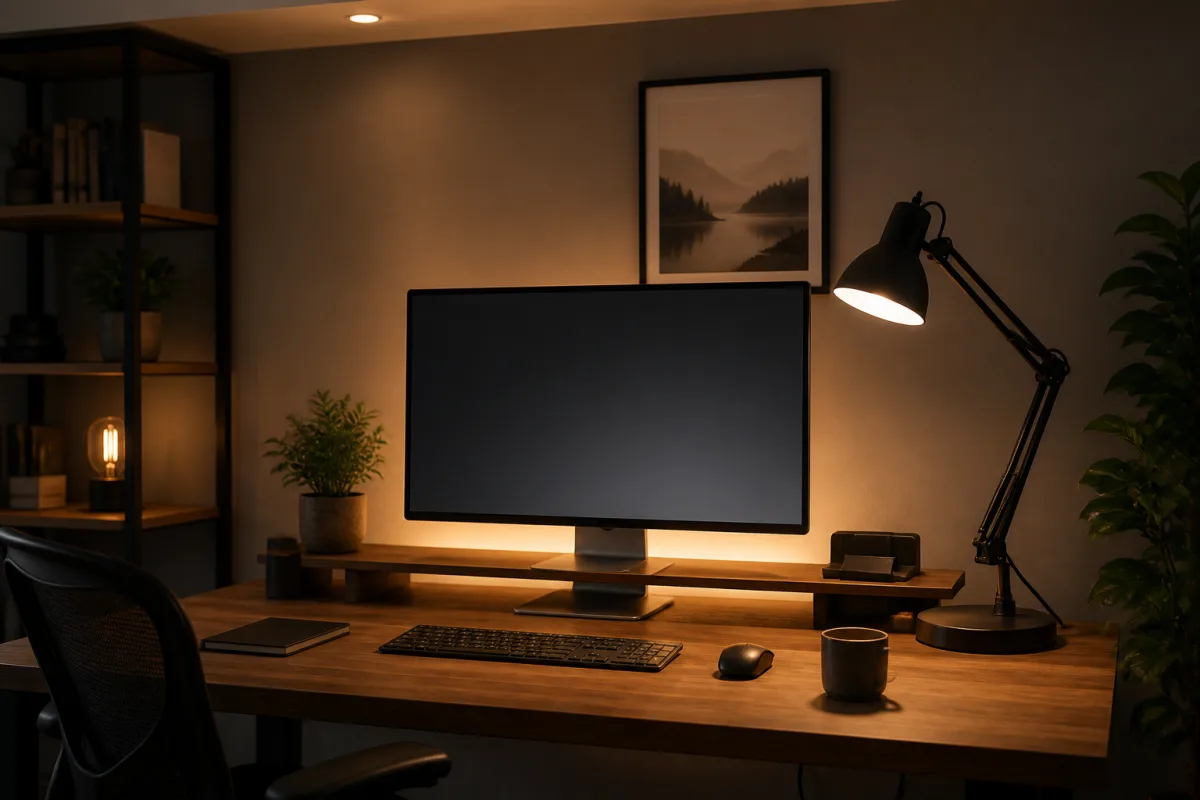
A television that turns into a mirror every evening is not asking for a darker room — it is asking for different light. Three moves settle most cases without buying anything: put the lamps where the panel cannot reflect them, set the picture for a lived-in room rather than a showroom, and keep one low layer of light on so the screen is not the only bright thing in view. The screen half of that bargain, panel types, picture modes and the diagonal that suits a given sofa, is catalogued guide by guide in Elettronica di Liguria's handbook of home electronics, an independent Italian desk that works through choosing a set, its image modes and its connections step by step. What follows is the lighting half.
Where do reflections on a screen actually come from?
A panel only mirrors what faces it. Anything in the slice of room in front of the glass — the floor lamp beside the sofa, the downlight over the coffee table, the window opposite — can land on the screen as a bright ghost; anything outside that slice cannot. So the first survey is done sitting down: pause on a dark scene, take the usual seat, and note every bright shape the panel throws back. The lamp behind or beside the television is almost never the culprit; the one at the viewer's elbow usually is. The same seated check is how we hunt reflections on framed glass in the guide to lighting wall art without glare.
How do you move light instead of removing it?
Once a source is caught in the reflection, the fix is geometry before hardware. Slide a floor lamp an arm's length sideways and it leaves the mirror zone while still washing its corner; swivel a shade or raise it a hand's width and the beam keeps its job without appearing in the panel. Sources that cannot move — a ceiling grid, a fixed sconce — get dimmed or diffused rather than switched off, because the aim is to lower the reflected brightness, not the room's. That is the standard ergonomic reading of glare: the Canadian Centre for Occupational Health and Safety lists repositioning fixtures, shading or diffusing them, and favouring several small low-intensity sources over one bright one among the working corrections in its lighting survey guide.
Which picture settings help instead of hiding?
A television set for a bright showroom fights its own room: vivid modes push the backlight hard, which makes every reflection look darker by comparison, until a dark scene arrives and the lamp floats in the glass anyway. A cinema-style mode at a moderate backlight usually reads calmer in a lamp-lit room, and the panel's own brightness control does more for comfort than a dimmer on the far wall. The desk version of that decision is the same test we run in the home office lighting guide: match the screen to the room, not the room to the screen.
Why keep one layer of light on at all?
A black room is not the goal — a pitch-dark space around a bright panel is its own strain, because the eye keeps bridging a hard contrast it was never asked to bridge. A soft source behind or beside the television, dimmer than the picture and aimed at the wall rather than the screen, lifts the room's floor so the panel can sit lower. That is the same layered logic as the guide to layered smart lighting: ambient, task and accent doing separate jobs, with the accent, here the wash behind the set, doing the quiet work.
Judge the room from the seat, on a dark scene
Run the test at night, from the cushion the room is actually watched from: pause a dark scene, look for bright shapes in the panel, and deal with those sources only — move them, shade them, or dim them. Then check the rest of the room still feels inhabited: faces readable, steps safe, no single pool of light floating in the glass. If the television ends up the brightest thing left, raise the room a little rather than lowering the picture further.
Move the lamp before you dim the room — a reflection is a position problem first.
Common mistakes
- Switching every lamp off for film night, then wondering why eyes ache by the second act.
- Pointing a sconce or picture light at the wall behind the sofa so it lands squarely in the panel.
- Pushing the picture mode brighter to outshout a reflection that one moved lamp would remove.
- Blaming the television for a window that only glares between lunch and late afternoon.
A related question is how a room stays bright without becoming a source of glare in the first place. The answer often lies in the architecture rather than the lamp: shutters, deep window reveals and a lighting plan timed to the hour. A house in the Mediterranean handles this daily, and the walkthrough at keeping a room bright, not glaring shows how midday heat and late dinners outside are managed with the same few moves, which translate well to any room with a screen.