Lighting a Barn Venue for a Weekend Event
How to light a barn or farmhouse venue for a weekend event, from arrival to after-dark photographs, with practical fixture, power and timing choices.
- Published: 15 September 2026
- 1400 words
- 6 min read
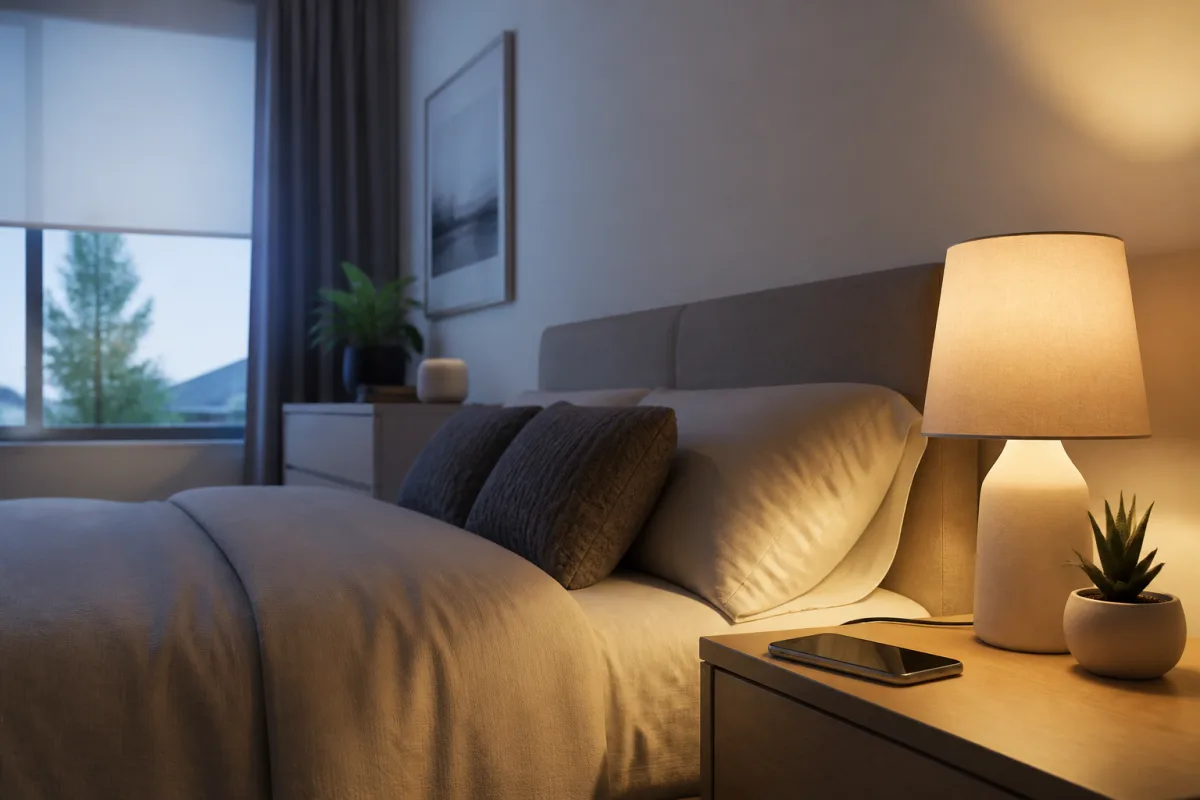
A barn or farmhouse venue needs two lighting plans running at once: one for the guests who are moving, eating and talking, and one for the camera after the sun goes down. The working answer is to light the room in layers, keep the ambient level low enough to hold atmosphere, and place a few brighter, warmer pools where people actually stand. Couples planning the weekend, and the people staying over, get the most out of a venue when the lighting is decided before the date rather than on the night.
Start with what the building already gives you
A barn is usually a large volume with a dark ceiling, and that ceiling is the single biggest factor in how the room reads. Light aimed upward disappears into the rafters and never reaches a face. Light aimed across the room at eye height does the opposite: it lands on people and on the tables, and it leaves the roof dark, which is what makes a barn feel like a barn instead of a hall.
Farmhouses add a second problem. Rooms are smaller, ceilings are lower, and the existing fixtures are often the original ones, which were designed for reading a newspaper, not for a party. Those fixtures are worth keeping on a dimmer rather than replacing, because they carry the character of the house and they give the photographer a warm background when the main room is lit separately.
The practical first step is a walk-through at the same hour as the event. A venue visited at noon tells almost nothing about how it will look at nine in the evening. The weekend venue planning notes that couples collect before signing cover this kind of timing question, and the same logic applies to the lighting: the hour of the day changes the answer.
How much light does a barn reception actually need?
Less than most people expect, and more evenly than most people expect. A seated dinner needs enough light to read a menu and see a plate, which is a modest amount, but it needs that amount spread across the whole seating area rather than concentrated in one bright spot. The eye adapts to the brightest thing in the room, so a single unshaded bulb over one table makes every other table look dim by comparison.
A useful target is a soft, even wash at table height with no visible bright source in the field of view. Guests should not be able to point at the lamp that is making them squint. If they can, the fixture needs a shade, a diffuser, or a move.
Circulation areas are the exception. Paths to the restrooms, the bar, and the exit need to be clearly brighter than the seating, because people walk them while carrying drinks and while talking over their shoulder. A dark path is where accidents happen, and it is also where the venue's insurance and safety expectations tend to be strictest.
What changes after dark for photographs?
Everything about color and contrast changes, and the change is fast. In daylight, a camera can hold a bright window and a dark interior in the same frame. After dark, the camera has to choose, and it usually chooses the faces, which turns the background black. The fix is not more light everywhere; it is a background that is lit at roughly the same level as the people in front of it.
Warm light reads better than cool light on skin, and it also matches the memory of a barn at night. Bulbs in the 2200K to 2700K range, which is the amber end of the scale, keep skin tones from going gray. Cool white bulbs at 4000K and above make a wooden interior look institutional and make faces look tired in photographs.
Flicker matters more than most people realize. Cheap LED bulbs and dimmers that are not matched to the bulb can produce a flicker the eye barely notices but the camera records as banding across the frame. The test is simple: film a short clip on a phone at the dimmed level the room will actually use, and watch it back. If bands crawl across the screen, the dimmer and the bulb are not compatible.
Golden hour is the one window where the interior and the exterior can be balanced without much equipment, because the sky is still bright enough to register. That window is short, often twenty to thirty minutes, and it is worth planning the portrait session around it rather than around the schedule of the meal.
Where should the fixtures go?
Think in three layers, and place each one for a different job.
The base layer is the ambient wash: a few broad, diffused sources high enough to spread across the room but aimed down and across rather than straight up. This layer sets the general level and should be on a dimmer.
The middle layer is the table and feature light: small pools of warm light on each table, on the bar, on the cake, and on any architectural detail worth seeing. These are the lights that appear in photographs, so they should be low, shaded, and warm.
The top layer is the accent: a few narrow beams on a wall, a beam, or a sign. This layer adds depth and gives the camera something to separate the subject from. It uses very little power and does a disproportionate amount of work.
For a farmhouse, the same three layers apply at a smaller scale, with the addition of lamps in the guest rooms. Guests staying over will want a bedside light they can switch off from the bed, and a hallway light that stays on late without waking anyone.
Power, safety, and the questions to ask the venue
Extension cords are the most common failure point at a barn event. A barn often has few outlets, and the ones it has may be on a single circuit shared with a kitchen or a pump. Ask the venue which circuits are available, what else is on them, and whether a generator is permitted.
Cords that cross a walkway need to be taped down or covered with a proper cable ramp, not just laid flat. Cords should never run through a doorway that will be used, and they should never be daisy-chained end to end to reach a distant corner. Outdoor-rated cable is required anywhere the cord may get wet, including a path that is only damp from dew.
Open flame is the other recurring question. Many barns are historic structures with dry timber, and candle policies vary widely. Battery-operated candles have improved enough that they are a reasonable substitute in most settings, and they remove the fire risk entirely. Where real flame is allowed, it needs to be in a holder that cannot tip, away from fabric, and never left unattended.
A short list of questions covers most of it: how many circuits, where are the outlets, what is the ceiling height and material, is there a dimmer already installed, is there a generator hookup, what is the candle policy, and who is responsible for setup and takedown. Getting answers in writing before the weekend avoids a conversation at six in the evening with guests already arriving.
What to test before the event day
A single evening test, done at the venue, at the right hour, with the actual bulbs and dimmers, prevents almost every problem described above. Set the room at the level it will run at, walk the paths, stand where the photographer will stand, and take a few frames on a phone. Then dim everything to the lowest setting and check that the room still reads as a room rather than a black box.
Label the dimmers and the switches. A venue with six unlabeled dimmers will be reset to full brightness by the first helpful guest, and the atmosphere built over an hour disappears in a second. Tape a small card next to each control with the level it should sit at.
Finally, decide who turns the lights on and off, and at what time. A weekend event has a rhythm: arrival in daylight, dinner at dusk, dancing after dark, and a slow wind-down. Lighting that follows that rhythm, rather than sitting at one level all night, is what makes a barn feel handled rather than hired.
Before the weekend arrives, it is worth checking how the barn's existing wiring, extension leads and generator will carry the load once string lights, uplights and a photo flash all run at the same time. Overloaded circuits and daisy-chained cables are a common cause of trouble at temporary venues, and the guidance published by the US fire protection association covers electrical safety and assembly occupancies in plain terms. Reading it before the event helps a planner space the load, keep cables off walkways and place extinguishers where staff can reach them quickly.