Use floor lamps to fill dark corners with warm light
Use floor lamps to fill dark corners with warm light. A clear working guide to base weight, shade angle, and switch placement.
- Published: 02 August 2026
- 580 words
- 3 min read
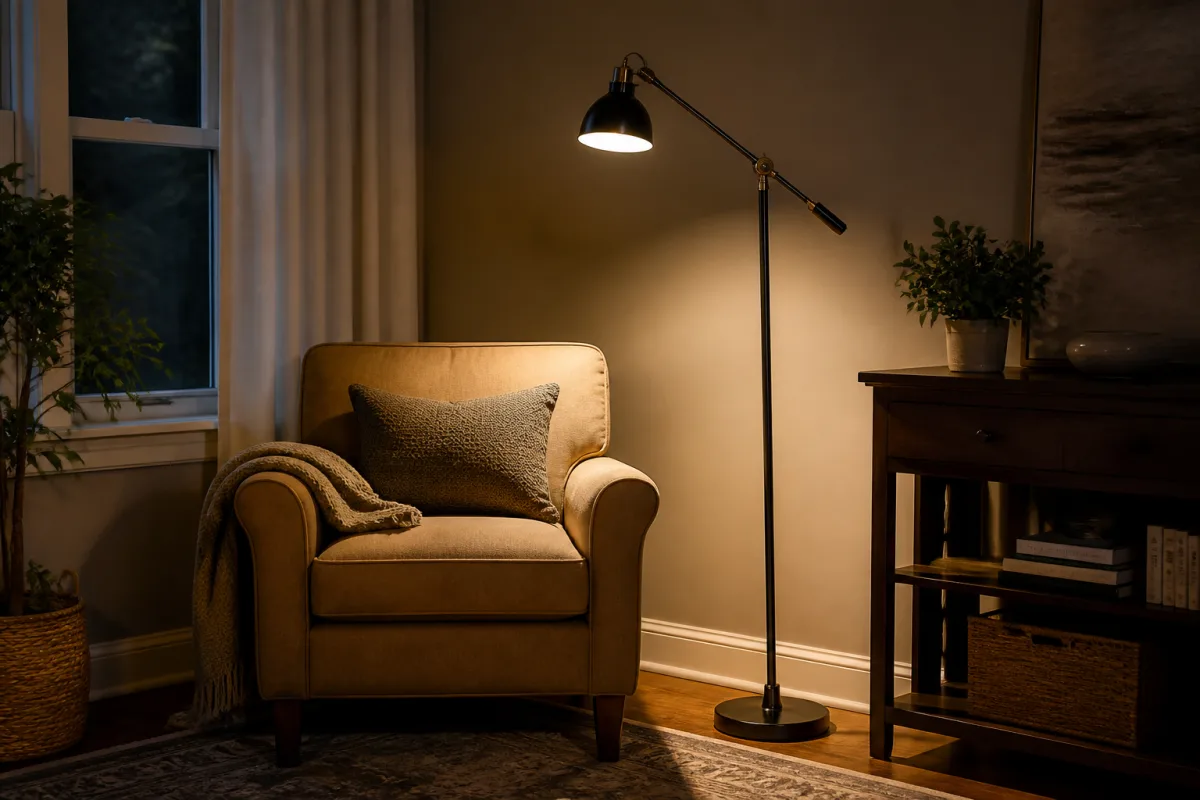
Good results usually come from a repeatable decision process rather than one lucky attempt. Here, base weight defines the outcome; shade angle explains the real working conditions; and switch placement gives you a practical checkpoint. Keeping those three ideas separate makes it easier to diagnose failures and improve without changing everything at once.
Base weight is also where a floor lamp stops being an electrical object and becomes a piece of furniture. Solid wooden bases are turned on a lathe, and the woodturning gouge geometry behind that work explains why one stem comes off the tool clean and another tears along the grain.
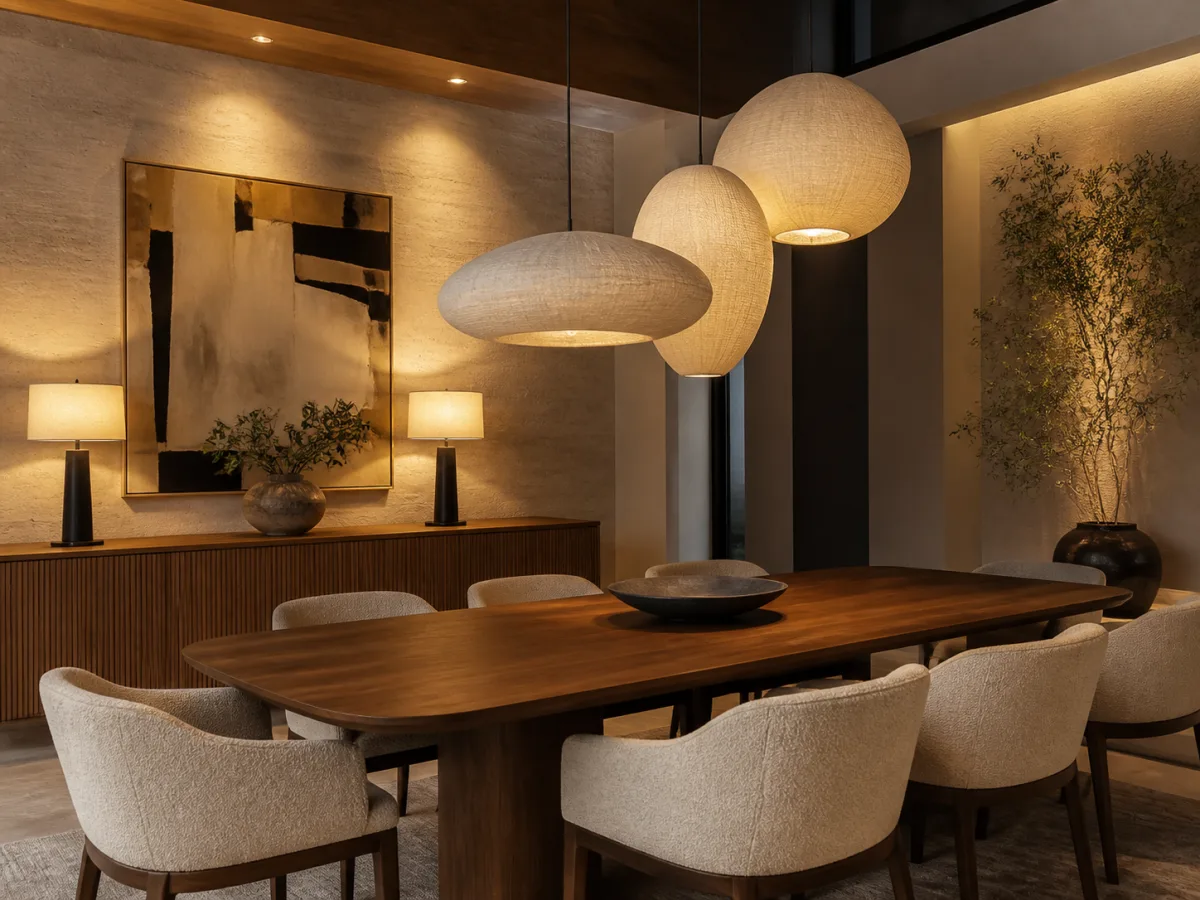
Placement decides what that warmth lands on: a lamp beside a walnut sideboard is judged by what it does to the grain. Colour temperature, colour rendering and contrast for exactly that job are worked through in our guide to lighting wood interiors.
Prepare before you start
Walk the property, route, or workspace before committing to a plan. Write down constraints, responsible people, deadlines, and the smallest version of success. Check safety requirements, permissions, backups, and fallback options. A short written brief prevents scope drift and gives everyone the same standard when pressure increases.
Step by step method
- Define the desired outcome in one sentence.
- Measure the starting conditions instead of guessing them.
- Build or test the smallest complete version first.
- Record evidence around switch placement, including dates, versions, and assumptions.
- Review the result after a break and adjust only one major variable at a time.
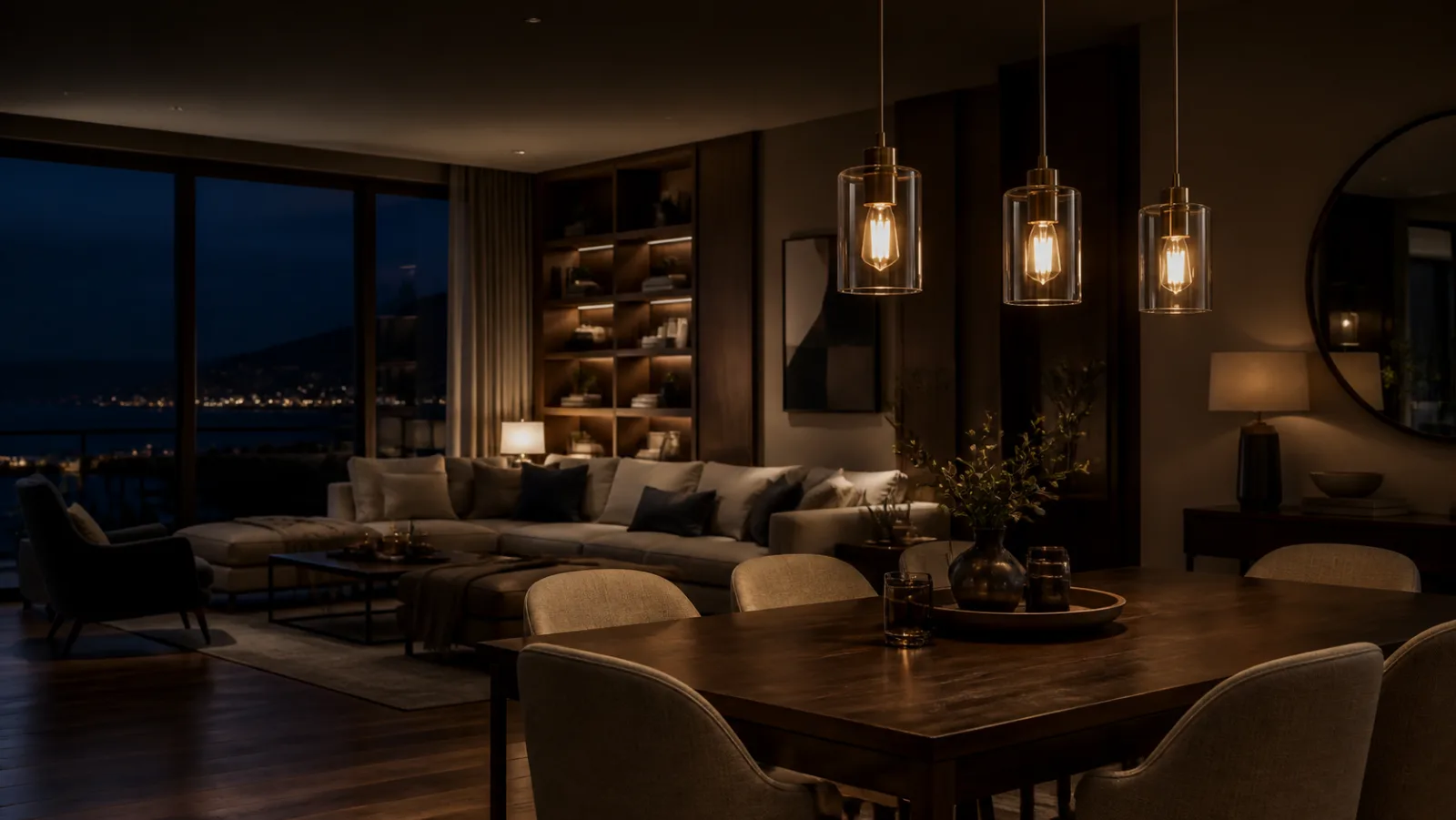
A dark corner can also become the evening's bar: the home bar lighting guide turns the same warm pool toward a shelf of bottles.
Judge the result honestly
Evaluate against the original goal, not against an idealized version invented afterward. Ask whether the main point is obvious, whether cost and time were reasonable, and whether another person could repeat the process from your notes. If feedback is vague, request comments on clarity, reliability, comfort, durability, or value rather than asking for a general opinion.
Observe first, build small, document honestly, and adjust with evidence.
Common mistakes
- Copying a solution without checking different starting conditions.
- Treating one success as proof that every variable was understood.
- Choosing complexity when a smaller test would answer the question sooner.
- Failing to save versions, dates, permissions, and maintenance notes.
A floor lamp solves the dark corner inside the room, but the same problem often waits outside the front door. Anyone leaving before sunrise to put bins at the curb meets a stairwell, a shared hallway, or a stoop that is still unlit, and a warm interior glow does not reach it. A small fixture aimed at the path, or a porch light in a dark corner, keeps footing sure at that hour. The linked guide covers containers, timing, and pre-dawn set-out in New York, which is useful context when planning the outdoor half of the same lighting scheme.